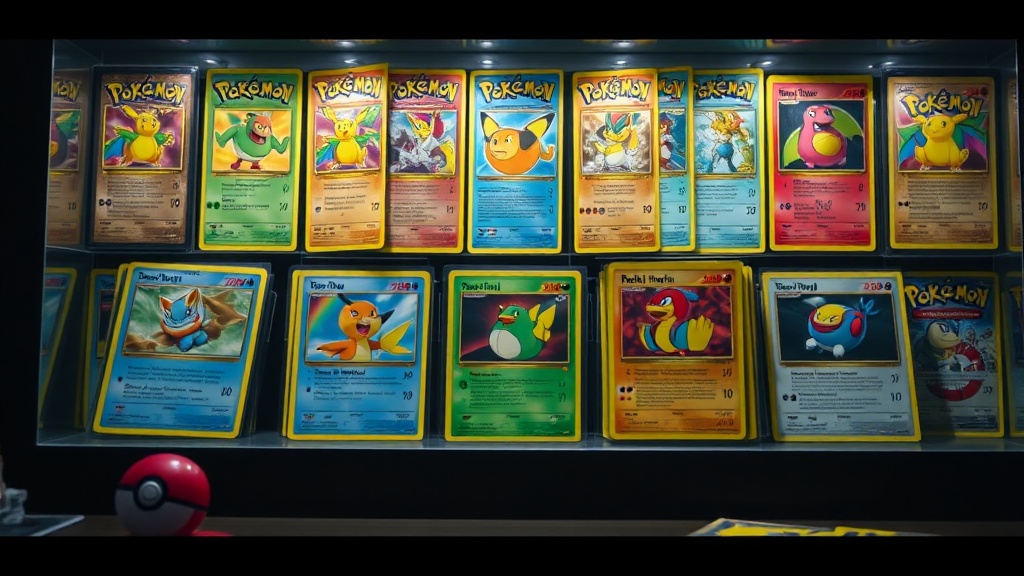
5 key Ways to Protect and Display Your Pokemon Card Collection

Use Premium Card Sleeves for Daily Protection
Store Valuable Cards in Rigid Top Loaders
Display Favorites in UV-Protected Frames
Organize with Custom Binder Pages
Consider Professional PSA Grading for High-Value Cards
A Pokemon card collection represents years of hunting, trading, and memories. Whether you've got a single binder or hundreds of PSA slabs stacked in a closet, protecting those cards from damage while showing them off properly can feel overwhelming. Here's the thing—most damage happens slowly. Light fades colors. Humidity warps cardboard. A loose card in a backpack gets bent before you notice. This post breaks down five proven methods for keeping cards safe and displaying them in ways that spark conversations (and maybe a little envy at game night). No fluff. Just practical strategies that work.
What's the Best Way to Protect Pokemon Cards from Bending and Surface Damage?
Start with sleeves. It's that simple—and that critical. Unprotected cards pick up fingerprints, collect dust, and bend at the corners. The right sleeve creates a barrier against all three.
Not all sleeves are equal, though. Penny sleeves—those thin, clear polypropylene sleeves—cost about a penny each (hence the name). They're fine for bulk storage, for cards worth under a dollar. The catch? They're thin. They crease easily. A heavy card can warp right through them.
For anything valuable—or anything you care about—upgrade to premium sleeves. Brands like Dragon Shield, KMC, and Ultra Pro Eclipse offer much thicker material. We're talking 100-120 microns versus 40 for penny sleeves. These slide smoothly, resist splitting at the seams, and shuffle like butter if you're playing the TCG.
Double-sleeving takes protection further. You slide the card into a "perfect fit" sleeve—tight, no excess material—then into a standard sleeve. This creates a seal that keeps dust, moisture, and oxygen away from the card edges. Perfect for graded-worthy cards you haven't sent to PSA yet.
Toploaders come next in the hierarchy. Rigid plastic frames—usually 3" x 4"—that prevent bending entirely. Standard toploaders work for raw cards. Thick toploaders (130pt, 260pt, 360pt) accommodate graded slabs or cards with multiple sleeves. Just remember—toploaders alone don't prevent surface scratches. Always sleeve before loading.
How Should You Store Pokemon Cards Long-Term?
Dark, cool, and dry. Those three conditions prevent the slow damage that ruins collections over years.
Light—especially UV light—fades card borders and artwork. That Charizard you love? Leave it in direct sunlight for six months and the orange turns peach. Store cards in opaque boxes, binders with covered pages, or cabinets away from windows. Some collectors even use UV-protective display cases—worth considering for showcase pieces.
Temperature matters more than most people think. Heat softens the adhesive holding the card layers together. Cold makes them brittle. The sweet spot sits between 60-70°F (15-21°C). Attics and basements? Usually bad ideas unless climate-controlled. A closet in your living space beats both.
Humidity kills cards silently. Above 60% relative humidity and you risk mold, mildew, and that telltale waviness that graders penalize heavily. Below 30% and the card dries out, becoming brittle. Target 40-50% humidity. Use a hygrometer (cheap on Amazon—under $10) to monitor your storage area. If your space runs humid, a small dehumidifier pays for itself quickly.
Storage Solutions Comparison
| Storage Type | Best For | Protection Level | Cost (Approximate) |
|---|---|---|---|
| Cardboard boxes (BCW, Ultra Pro) | Bulk commons, set building | Basic—bending/pressure risk | $2-5 per box |
| Ultimate Guard Boulder boxes | Competitive decks, travel | Good—rigid, compact | $8-12 each |
| D-ring binders with pocket pages | Organized viewing, set completion | Moderate—page quality varies | $15-30 for setup |
| Toploader boxes (1-row, 2-row) | Valuable singles, pre-grading | High—rigid protection | $10-25 per box |
| Safe deposit box / fire safe | High-value cards, insurance items | Maximum—theft/fire protection | $50-300 annually |
Binder selection trips people up. Avoid 3-ring binders—pages slip, cards get caught in rings, disaster happens. Use D-ring binders or Ultimate Guard ZipFolio binders with fixed pages. Side-loading pockets (cards slide in from the side) beat top-loading because cards can't fall out when the binder opens.
For serious collections, consider BCW Trading Card Storage Boxes. They come in counts from 200 to 5,000 cards. The 3,200-count "monster" boxes hold entire master sets with room for toploaded hits. Stackable, label-friendly, and affordable.
How Do You Display Pokemon Cards Without Damaging Them?
Displaying cards risks everything you're trying to prevent—light exposure, handling, accidents. But a collection hidden away defeats the purpose for many collectors. The solution? Display methods that protect as they showcase.
Wall frames designed for trading cards solve the visibility problem. GameFrame makes magnetic frames with UV-protective acrylic. Cards slide in easily, stay flat, and the magnet holds tight. Hang them away from direct sun and you've got a gallery-worthy display. For multiple cards, BCW Card Displays offer 9-card grid frames—perfect for showing off a full evolution line or your favorite set's rares.
Graded slabs (PSA, CGC, BGS) display beautifully in slab stands. These small acrylic holders angle the slab for desk or shelf viewing. Some collectors use tiered stands—three or five slabs stepping up like stadium seating. Clean, organized, no wall mounting required.
LED strip lighting inside display cases solves the visibility-versus-damage tension. LEDs produce minimal UV compared to sunlight or halogen bulbs. A glass-front cabinet from IKEA (the DETOLF remains popular) with LED strips and some UV-filtering window film on the glass? That's a collector's dream setup for under $200.
Worth noting—rotation matters. The cards you display today don't need to stay there forever. Swap pieces seasonally. Keep a "current rotation" of 10-20 displayed cards while the rest stay in proper storage. This spreads light exposure across your collection rather than concentrating damage on your favorites.
Should You Get Pokemon Cards Graded?
Grading serves two purposes: protection and value authentication. A PSA or CGC slab encases your card in a hard plastic shell with sonic welding—permanently sealed, chemically stable, physically tough. Drop a graded card and the slab might scratch; the card inside usually survives fine.
Not every card warrants grading. Here's the thing—grading costs money. PSA runs $25-300+ per card depending on declared value and turnaround speed. CGC starts around $18 for bulk submissions. Submitting a $5 card that grades 8 (NM-MT) often leaves you with a slab worth less than the grading fee. The math only works for cards with raw value above $30-50—or cards with extreme sentimental value.
Condition determines whether to submit. Use a loupe (10x magnification) or bright, angled light to check for:
- Surface scratches or print lines
- Edge wear (whitening on dark borders)
- Corner softness or whitening
- Centering (borders should be roughly equal)
Cards with visible flaws usually grade 7 or below. Modern cards in pack-fresh condition—handled carefully, immediately sleeved—often hit 9 or 10. Vintage cards (pre-2000) grading 8+ command premiums because condition rarity.
The major grading companies—PSA, CGC, and Beckett (BGS)—each have different standards. PSA uses a 10-point scale with half points; 10 means Gem Mint (essentially perfect). CGC uses similar numbering but includes subgrades (centering, edges, corners, surface) on some tiers. Beckett offers subgrades on all slabs and is known for stricter centering requirements. Research which service fits your cards and timeline.
What Insurance and Documentation Do Collectors Need?
A collection worth thousands needs protection beyond sleeves and boxes. Homeowners or renters insurance might cover cards—but usually with strict limits on collectibles (often $1,000 or less) and only for covered perils like fire or theft. That doesn't cover damage you cause, gradual deterioration, or accidents at a trade event.
Scheduled personal property endorsements add specific coverage for high-value items. You list the cards (or groups of cards), provide values, and pay additional premium. This covers more perils and higher limits. For collections exceeding $10,000, specialized collectibles insurance through companies like Collectibles Insurance Services or Hagerty offers broader protection—including during shipping, at shows, and for mysterious disappearance.
Documentation makes or breaks insurance claims. Photograph every valuable card—front, back, any flaws. Record the card name, set, number, condition, and estimated value. Update this inventory quarterly. Cloud storage (Google Drive, Dropbox) ensures records survive even if your physical collection doesn't. Some collectors use apps like CollX or TCGplayer to track collections digitally—these export data useful for insurance purposes.
For extremely valuable single cards—think $1,000+—consider safe deposit boxes at your bank. Access is limited to banking hours, but protection against fire, flood, and theft is absolute. Cost runs $50-300 yearly depending on box size and location. A fire-rated home safe works for moderate values, but most residential safes only provide 30-60 minutes of fire protection. That's not enough for serious house fires.
Cards represent money, sure. But they also represent time—hours spent hunting, trading, remembering. Protecting that investment means thinking ahead. Sleeves today prevent regrets tomorrow. Proper storage preserves colors that would otherwise fade. Documentation ensures that if disaster strikes, you're not starting from zero. The collectors who sleep well at night? They've done the boring work—the right sleeves, the right boxes, the right insurance. Their cards stay safe. Their displays look sharp. And when someone asks to see the collection, there's no panic about fingerprints or fumbled corners. Just confidence.