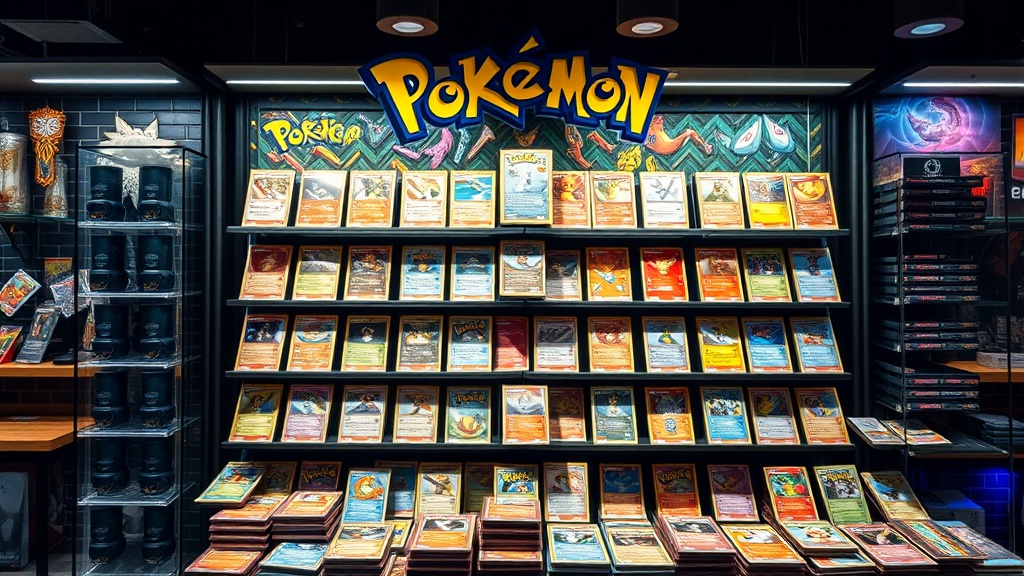
Building a Pokémon Card Display That Stops Visitors in Their Tracks

What's the Difference Between Storing and Showcasing?
Here's something that might surprise you: collectors who display even a small portion of their cards report 34% higher satisfaction with their hobby than those who keep everything boxed away. That's not about bragging rights—it's about creating a space that celebrates what you've built. This guide covers how to transform your collection from hidden inventory into a genuine showpiece without risking damage, fading, or the heartbreak of a knocked-over frame.
Most collectors start the same way—cards go into sleeves, sleeves go into boxes, boxes go into closets. It's safe, sure, but it misses something. Your cards represent hours of hunting, trading, and the occasional lucky pull. They deserve more than darkness. The challenge? Displaying them without exposing them to UV light, humidity swings, or curious fingers that don't know better. Let's walk through what actually works.
What Display Options Won't Destroy Your Cards?
Not all displays are created equal—and some popular options are genuinely dangerous. Regular glass frames? They trap moisture and amplify sunlight. Open stands? Dust magnet. Magnetic cases hung on walls? One bump and you've got a $500 card skittering across hardwood. Here's what experienced collectors actually use.
UV-protective acrylic cases are the gold standard for individual showcase pieces. Companies like Ultra Pro and BCW make museum-grade options that block 98% of harmful light while keeping dust and fingers away. Look for cases with silicone gaskets—they create a micro-environment that resists humidity changes. Expect to spend $15-40 per case for quality protection.
Wall-mounted magnetic displays work beautifully for lower-value cards you want to rotate regularly. The key is finding ones with actual UV-filtering film (not just tinted plastic). Check MagPros or similar specialty retailers. Mount them away from direct sunlight—yes, even with UV protection, indirect light is smarter.
Curio cabinets with LED lighting solve the bulk display problem. Traditional bulbs generate heat and emit UV; LED strips (2700K warm white) illuminate without the damage. Add a small humidity monitor inside—aim for 40-55% relative humidity. Too dry and cards become brittle; too humid and you're risking mold in those perfect edges.
How Do You Light Cards Without Fading Them?
Lighting makes or breaks a display. The wrong setup will bleach a Charizard into a sad orange ghost within months. Here's what the card conservation community has learned through unfortunate trial and error.
LED only—period. Incandescent and halogen bulbs emit significant UV radiation and heat. Even "cool" fluorescents degrade card stock over time. Quality LEDs produce neither. Look for 90+ CRI (Color Rendering Index) bulbs that show true colors without the harshness of cheap strip lighting.
Position lights above and in front, never behind. Backlighting creates glare on toploaders and magnetic cases, plus it heats the display area. Angled front lighting (about 30 degrees from vertical) eliminates reflections while making holographic patterns dance. Battery-powered puck lights work well for smaller displays and eliminate cord clutter.
Install a timer. Your cards don't need to be illuminated 24/7. Set display lights for evening hours when you're actually home to enjoy them—maybe 5-6 hours daily. This single habit dramatically extends the safe display life of even your most sensitive cards. Some collectors use smart bulbs with sunset triggers; others prefer simple mechanical timers. Both work.
Which Cards Belong in Your Display?
This question trips up newer collectors. The instinct is to show your most valuable pieces—your PSA 10 Charizards, your gold stars, your trophy cards. Resist that urge, at least partially.
High-value cards (anything worth $500+) face disproportionate risk on open display. Accidents happen. Displays get bumped during parties. House cleaners don't know what's fragile. Consider keeping your absolute gems in bank-safe storage or fireproof home safes, rotating in replicas or lower-grade versions for display purposes. Many serious collectors maintain "display copies" of their most iconic cards specifically for this reason.
Better candidates for permanent display: cards with sentimental value that won't destroy your finances if damaged, completed evolution lines that tell a visual story, artist collections (every card by your favorite illustrator), or type-themed groupings that create color harmony. A wall of Water-types in blues and purples beats a scattered assortment of random valuable cards every time.
Rotation is your friend. Keep 20-30 cards in active display, swapping monthly or seasonally. This keeps your space fresh, reduces cumulative light exposure on any single card, and gives you regular opportunities to inspect for any emerging issues. Winter might feature Ice and Fire types; summer brings Grass and Water. Theme rotations keep the hobby engaging.
What About Dust, Humidity, and Temperature?
Environmental control separates temporary displays from permanent ones. Cards are surprisingly sensitive—they're paper products, after all, layered with foil, ink, and sometimes texture applications that expand and contract at different rates.
Dust management starts with enclosure. Open displays require weekly cleaning; sealed cases need attention monthly. Use microfiber cloths only—paper towels scratch acrylic. For cards in open frames (not recommended, but common), compressed air blows dust away without contact. Never use cleaning sprays near displayed cards; the overspray travels further than you think.
Temperature stability matters more than the specific temperature. Cards stored between 60-75°F fare equally well; cards cycling between 60° and 80° daily develop waviness and corner stress. Avoid display locations near heating vents, fireplaces, or exterior walls with poor insulation. Interior walls at comfortable room temperature provide the most stable environment.
Humidity control is where most collectors slip up. Winter heating dries air to desert levels; summer air conditioning can create condensation cycles. Small display cases benefit from silica gel packets changed quarterly. Larger cabinets might need active humidity control—mini dehumidifiers or humidifiers depending on your climate. The target range of 40-55% isn't arbitrary; below 40% and cards dry out, above 55% and mold becomes possible.
How Can You Display Bulk Without Looking Hoarded?
Not every collector wants a museum. Some of us just want to see our cards without the closet-box experience. For larger collections, aesthetic organization prevents the "storage room" look.
Consider binders as rotating galleries. A nice three-ring binder on a stand, open to a favorite page, costs little and displays 9-18 cards beautifully. Change the page weekly. Visitors flip through; you revisit forgotten favorites. It's interactive without being chaotic.
Shadow boxes work for thematic collections—every starter Pokémon from every generation, or your complete gym badge card set. The depth allows for creative arrangement: cards layered with pins, stickers, or small figures. These become conversation pieces rather than just card storage.
Shelving with risers solves the depth problem of standard bookshelves. Acrylic stair-step risers let you see every card in a row without straining. Group by set, type, or artist. Add small labels—handwritten or printed—for that curated gallery feel. This approach scales well; a single shelf can hold 50+ displayed cards in an organized, visually appealing way.
Remember that negative space helps. Cramming every inch with cards looks overwhelming. Leave breathing room between groupings. Your eye needs somewhere to rest, and the cards you do display will command more attention when they have space around them.
When Should You Reconsider Your Display Setup?
Displays aren't permanent installations. Cards change value; your collection grows; display technology improves. Schedule a formal review twice yearly—maybe when you adjust for daylight saving time.
Check for any fading (compare displayed cards to stored duplicates if you have them), warping, or case damage. Acrylic scratches over time; magnetic cases lose their seal. UV-protective coatings degrade after years of exposure. Budget for replacement cases every 3-5 years for actively displayed high-value items.
Watch how you actually use the space. Do you stop and look? Do guests comment? If your display has become invisible furniture, it's time to rotate, reorganize, or relocate. The best display is one that brings you genuine joy when you walk past it—that's the whole point of collecting in the first place.