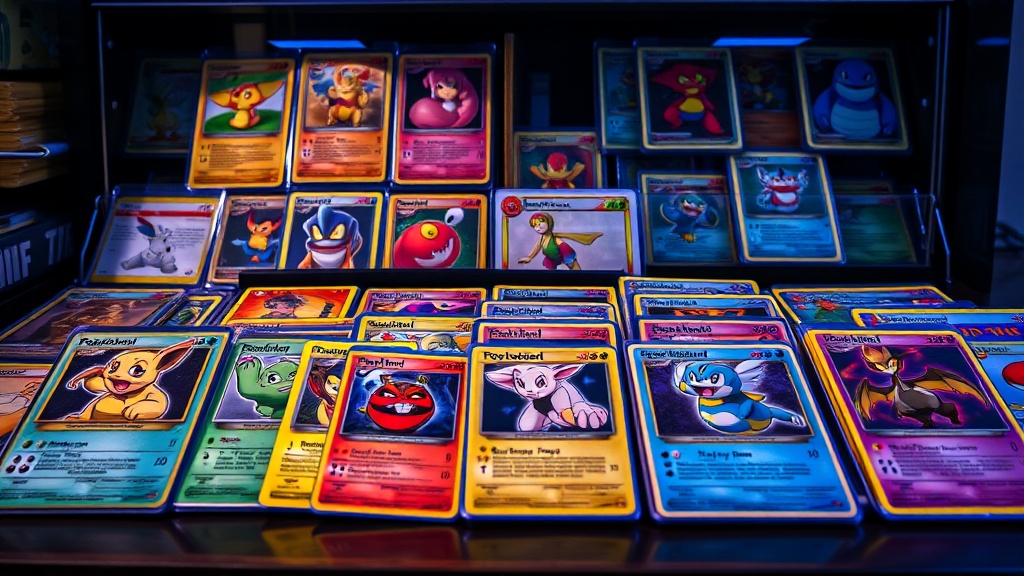
Organizing Your Pokémon Card Collection by Set and Rarity

Did you know that the average modern Pokémon TCG set can contain over 200 unique cards, and if you're collecting multiple sets, your pile can quickly reach the thousands? Managing a massive influx of cardboard is a common hurdle for collectors. This guide focuses on the practical methods for sorting your cards so you can actually find what you're looking for—whether that's a specific holographic card or a bulk common to complete a set. We'll look at different systems for categorization, the tools you'll need, and how to maintain an organized library that grows with you.
How should I sort my Pokémon cards?
The first decision you'll face is whether you want to sort by set or by card type. If you're a completionist, sorting by set is the only way to go. You'll group every card from a specific expansion—like Scarlet & Violet or Sword & Shield—together. Within those sets, you'll then sub-sort by rarity. A standard method is to group your commons first, then uncommons, then rares, and finally your high-value ultra-rares or special illustrations. This ensures your most precious hits aren't buried under a mountain of bulk.
If you're a player rather than a pure collector, your sorting needs look different. Players often care more about card function. You might choose to group cards by their type (Fire, Water, Psychic, etc.) or by their stage (Basic, Stage 1, Stage 2). This allows you to quickly grab the pieces you need for a specific deck-building session. It's a different mindset—moving from a library-style organization to a toolkit-style organization.
For those who find themselves with thousands of cards, a hybrid approach works best. You might keep your "hits" in high-quality-sleeved binders and your "bulk" in specialized storage boxes. It's a smart way to manage space while keeping your most expensive investments safe. Don't try to put everything in one binder; you'll lose track of your progress and likely damage the cards with excessive handling.
What are the best tools for card storage?
The tools you choose depend entirely on your collection's size and your budget. For a growing collection, binders are the most visual and satisfying way to display your progress. However, be careful with the type of binder you use. Standard three-ring binders can be heavy and might put pressure on the cards, causing them to bend. Look for dedicated TCG binders with fixed pages. Using penny sleeves inside a binder is a standard practice to prevent scratches and prevent the card from sticking to the plastic page.
If you have massive amounts of bulk, binders are a waste of money and space. Instead, look into specialized card boxes or "BCW" style storage boxes. These are much more efficient for high-volume storage. You can use dividers to separate different sets or rarities within a single box. This keeps your collection from becoming a disorganized mess when you're searching for that one specific card to finish a set.
For high-value cards, don't even bother with a binder. Use top-loaders or magnetic one-touch cases. These provide a much higher level of protection for cards that are worth more than a few dollars. If you're looking for professional-grade documentation, you might want to check out the official Pokémon TCG website to verify set lists before you start sorting. Knowing exactly what should be in a set prevents the frustration of searching for a card that doesn't exist in that specific expansion.
Can I use digital tools to track my collection?
\p>As your collection expands, manual tracking becomes nearly impossible. This is where digital databases and apps come into play. Many collectors use spreadsheets, but there are also dedicated apps and websites designed specifically for card-collecting. These tools allow you to log a card's set, rarity, and condition, which is incredibly helpful if you ever decide to sell or trade your cards. Having a digital footprint of your collection makes it much easier to estimate your total collection value.
One thing to keep in mind: digital tracking is only as good as the data you input. If you're a bit lazy with the details, your spreadsheet won't be much help when you need to find a specific card. Be consistent with how you name things. If you use "Base Set" for one entry and "Base Set (1999)" for another, your search functions will fail you. Consistency is the foundation of a good digital library.
For collectors who want to stay updated on current market values, sites like TCGPlayer are excellent resources. They don't just show you what a card is worth; they show you the real-time market demand. This information can help you decide whether to keep a card in a binder or move it to a more secure storage method. A card's value can fluctuate wildly, so staying informed is a part of the organizational process.
Remember, the goal of organization isn't just to keep things tidy—it's to make your hobby more enjoyable. When you can find exactly what you're looking for in seconds, the frustration of the "search" disappears, leaving only the joy of the collection. Whether you're a casual collector or a serious investor, taking the time to set up a system now will save you hundreds of hours later. Don't wait until you have a mountain of cards to start thinking about how to manage them. Start small, be consistent, and enjoy the process of building your personal library.