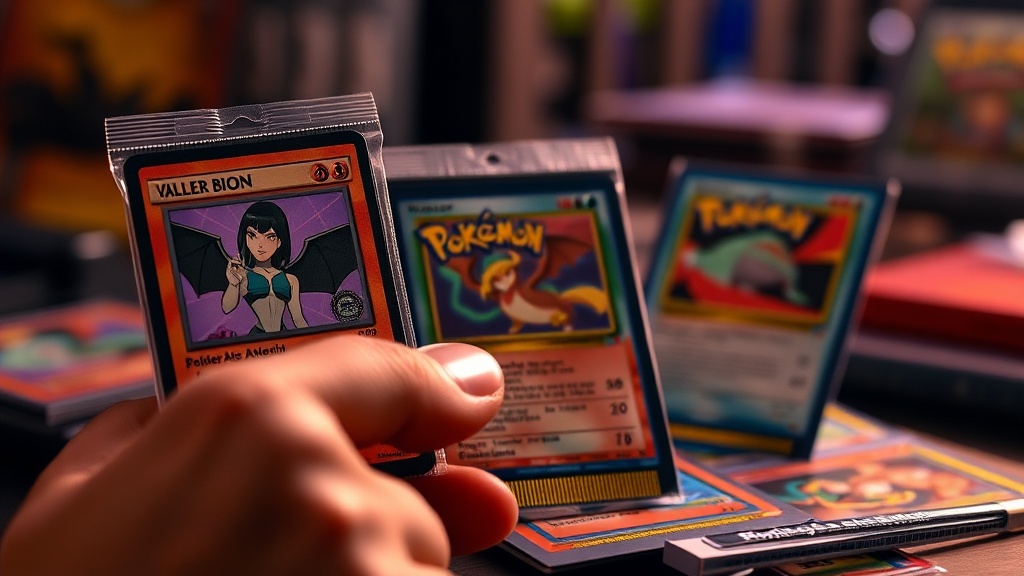
Why Penny Sleeves Are Secretly Damaging Your Pokemon Cards

Quick Tip
Always use acid-free, PVC-free inner sleeves combined with rigid toploaders or semi-rigid card holders for valuable Pokemon cards instead of relying solely on penny sleeves.
Most collectors start with penny sleeves. They're cheap, widely available, and seem like the obvious first step for protecting valuable Pokemon cards. Here's the thing — those thin, clear sleeves might be doing more harm than good. This post breaks down why standard penny sleeves can damage your collection over time, what actually happens to the plastic (and your cards), and which storage alternatives won't slowly ruin that holographic Charizard you've been holding onto since 1999.
Are Penny Sleeves Actually Bad for Pokemon Cards?
Yes — over time, they can be. Standard penny sleeves are made from polyvinyl chloride (PVC), a soft plastic that's affordable but chemically unstable. The catch? PVC contains plasticizers that keep the material flexible. Those same plasticizers break down and leach out over months and years, creating a slightly oily residue that can stain card surfaces, cause ink to bleed, or leave permanent clouding on holo foils.
Not all penny sleeves are created equal, of course. Some modern versions claim to be "acid-free" or "archival safe." Worth noting: the term "acid-free" doesn't automatically mean PVC-free. If the sleeve feels soft, pliable, and has that distinctive plastic smell, it's probably PVC-based regardless of the marketing language on the package.
The damage isn't immediate. You won't pull a card out after a week and see destruction. But collectors storing cards in penny sleeves for years — especially in garages, attics, or any space with temperature swings — often discover their vintage cards have developed irreversible blemishes. That PSA-graded Shadowless Blastoise? Suddenly worth significantly less.
What Causes Penny Sleeves to Stick to Cards?
Static electricity and plasticizer breakdown are the main culprits. Cheap PVC sleeves generate static cling that pulls at delicate card surfaces — particularly holographic foils — making removal feel like peeling tape off paper. Over time, the plastic actually bonds with the card's coating.
Temperature accelerates everything. PVC becomes more reactive in heat, releasing those damaging chemicals faster. Humidity makes it worse. The combination creates what conservators call "vinegar syndrome" in plastics — a slow, inevitable degradation that smells faintly of acetic acid and leaves cards sticky, spotted, or physically stuck to their sleeves.
Here's a quick comparison of common budget sleeve types and their long-term effects:
| Sleeve Type | Material | Risk Level | Best For |
|---|---|---|---|
| Ultra-Clear Penny Sleeves | Soft PVC | High | Very short-term sorting only |
| "Acid-Free" Penny Sleeves | Usually still PVC | Moderate-High | Not recommended for storage |
| Ultra Pro Platinum Series | Polypropylene | Low | Budget protection, 1-3 years |
| Dragon Shield Perfect Fit | Polypropylene | Minimal | Long-term inner sleeve |
| KMC Perfect Size | Polypropylene | Minimal | Double-sleeving, preservation |
Which Card Sleeves Should You Use Instead?
Polypropylene sleeves — specifically those from established brands like Dragon Shield, KMC, or Ultra Pro's higher-end lines. These use different plastic chemistry that's chemically inert, won't leach plasticizers, and creates far less static. The material feels crisper, clearer, and doesn't have that soft, rubbery give that PVC sleeves do.
For serious collections, the double-sleeve method works best. Start with a Dragon Shield Perfect Fit (tight inner sleeve), then add an outer sleeve — something like the Ultra Pro Eclipse or Dragon Shield Matte. This creates an airtight seal that keeps dust, moisture, and oxygen away from the card surface. It's the same approach used by Beckett Grading for cards submitted at the Mint or higher levels.
That said, not everyone needs museum-grade preservation. If you're sorting bulk commons for trades, penny sleeves serve a purpose — just don't leave cards in them for months. For anything valued over $20, anything vintage, anything with sentimental value: upgrade the sleeves. Your future self (and your cards) will thank you.