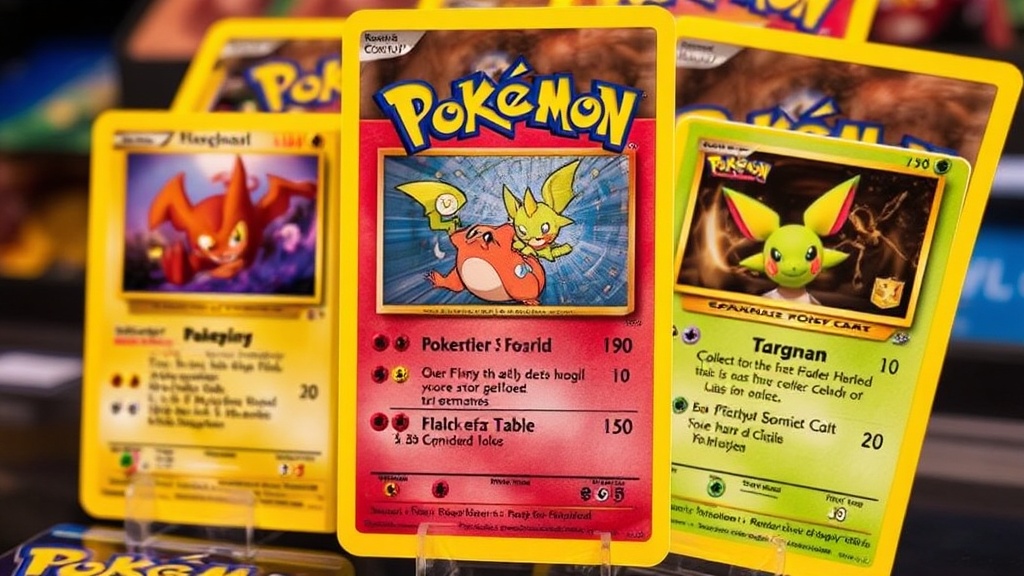
Rare Pokémon Card Errors That Increase Collector Interest

Incorrect Text and Spelling Mistakes
Misaligned Holofoil Patterns
Centering and Cutting Errors
A single, misprinted holographic Charizard sits in a heavy-duty plastic slab, its surface shimmering with a slight color shift that shouldn't exist. To a casual observer, it looks like a mistake. To a serious collector, it looks like a gold mine. This post explores the specific types of printing errors that turn "damaged" goods into high-value assets, specifically focusing on why certain flaws actually drive up market demand.
Errors in the Pokémon TCG aren't just mistakes; they are historical artifacts of the manufacturing process. While most people hunt for perfection, a niche group of collectors seeks out the deviations from the norm. We're talking about the weird stuff—the typos, the shifted holofoil, and the off-center cuts that shouldn't be there.
What Are the Most Common Pokémon Card Errors?
Common errors include misprints in text, incorrect artwork, and physical alignment issues like off-center cuts or double strikes. Most errors fall into two categories: "Error" cards (intentional or highly sought-after mistakes) and "Misprints" (unintentional factory blunders). While a misprint might be a single instance of a typo, a "error" card often has a recurring pattern that collectors recognize and hunt for.
Let's look at the most frequent culprits you'll find in the wild:
- Misspelled Names: It's rare, but it happens. A Pokémon's name might be missing a letter or have an extra one.
- Incorrect HP: Seeing a card with 100 HP instead of 120 HP can change its status from a common card to a curiosity.
- Reverse Holo Shifts: This is when the holographic pattern is shifted or slightly off-center from the artwork.
- Double Prints: This occurs when the ink is applied twice, creating a ghostly "shadow" effect on the text or art.
The value of these errors depends entirely on how much they deviate from the standard. A tiny scratch is just damage. A completely different color palette on the holographic foil? That's a trophy. If you want to protect these fragile specimens, you should look into selecting the right sleeves for your collection to prevent further wear.
How Much Do Error Cards Actually Cost?
The price of an error card is determined by its rarity, the degree of the error, and the current market demand for that specific Pokémon. There is no fixed price list because every error is a unique event. A "Silver Star" error on a high-end card might fetch thousands, while a typo on a common energy card might only be worth a few dollars to a specialist.
To understand the value, you have to look at the "Why." Why does a collector want a mistake? It's the same reason people collect rare errors in coins or stamps. It's the deviation from the standard that creates the rarity. If a mistake is a one-off fluke, it's a novelty. If it's a recurring error across a specific print run, it becomes a legitimate sub-set of the hobby.
| Error Type | Impact on Value | Collector Interest Level |
|---|---|---|
| Typo (Text/HP) | Low to Moderate | Niche/Completionists |
| Offset Printing | Moderate | Medium |
| Incorrect Holo Pattern | High | Very High |
| Wrong Art/Card Type | Extreme | Elite/High-End |
If you're looking at a card that seems "off," don't immediately toss it. It might be a mistake, or it might just be a poorly centered card. A centered card is a different story. If you're worried about the physical condition of your cards, you should definitely avoid sunlight damage to your collection to keep the colors vibrant.
Why Do Some Errors Increase Value Instead of Decreasing It?
Errors increase value when they create a unique visual or structural deviation that is significantly different from the standard version. Most collectors want a "perfect" card, but the "error collector" wants a "unique" card. This creates a two-tier market: the perfectionists and the error-hunters.
Think about it this way. A perfect Charizard is a beautiful piece of art. But a Charizard with a "Galaxy Holo" pattern—an error where the foil looks like a starfield instead of the standard pattern—is a piece of history. It represents a moment where the factory machinery did something unexpected. That unpredictability is what drives the price up. It's a break in the matrix.
There are a few specific types of errors that collectors obsess over:
- The "Ghost" Error: This is when the printing process skips a layer, making the text or art appear transparent or faded.
- The "Miscut" Error: When the card is cut too close to the art, leaving a white border or an uneven edge. These are often seen as damage, but if the error is extreme, they can be highly sought after.
- The "Color Error": This is a big one. If a card is printed with the wrong color palette (for example, a blue Pikachu instead of yellow), the value can skyrocket.
It's a fine line between a "misprint" and "damage." If a card has a crease, it's worthless to a high-end collector. If it has a color-shift error, it's a treasure. This is why understanding what makes a Pokémon card valuable is so important. You have to know the difference between a flaw that ruins the card and a flaw that defines it.
One thing to keep in mind: error-hunting can be a rabbit hole. You might spend hours looking through bulk packs only to find nothing but actual damage. It requires a trained eye. You need to look for consistency—or a lack thereof. If you find a pattern of errors in a specific box, you might be looking at a "bad" print run, which can actually be a good thing for collectors of errors.
The Pokémon Company International (TPCi) is generally very strict about quality control. This is why errors are relatively rare compared to other trading card games. When an error does slip through, it's a big deal in the community. It's a glitch in the system that becomes a prized possession.
I've seen collectors spend years tracking down specific "error runs." It's a deep, technical side of the hobby. It's not just about opening packs and hoping for a hit. It's about studying the manufacturing-level details of the cards themselves. It's about knowing what the "correct" version looks like so you can identify when something goes wrong.
If you find yourself holding a card that looks a little weird, don't just put it in a binder and forget about it. Research it. Look at the history of trading card games and their production methods to see if your card fits a known error profile. It might be a $5 card, or it might be a $500 card. The difference is often just a little bit of knowledge and a lot of patience.